«The Black Book of Rococó Café Espresso»
The Black Book of Rococó Café Espresso
On October 23rd at 3:00 PM at the Biblioteca México, I will present *El Libro Negro del Rococó Café Espresso* («The Black Book of Rococó Café Espresso»).
It is a compilation of experiences and an account of the organization behind this coffee shop, which remains alive in the heart of Córdoba—the coffee capital. It is now known as Rococó Banco Cultural del Café. Over the years, I gathered anecdotes that have now become part of the history of this small café—a place that weathered countless battles and created the world’s largest coffee festival. Yes, a tiny spot with just ten tables across from Parque España managed to take over the Zócalo in late May 2019.
I washed dishes and the sidewalk, cleaned windows, handled the register, and learned to be a barista, a taster, and a coffee roaster. Rococó became one of the eleven coffee shops in the world worth making a pilgrimage to visit. Yet, this wasn’t a stroke of luck; it was the result of strategy, vision, Aquiles’s commitment to excellence, and the standardization methods I had learned back in university.
Rococó didn’t just appear out of nowhere or get built on good fortune alone—though we were always under the protection of the Virgin of Mount Carmel, our «Generalissima» not only of the coffee bar but also of the Academy of Coffee Arts and Sciences since 2013.
When I first stepped behind the Rococó bar, no one in the Mexico City coffee scene had ever seen me before. After Aquiles passed away, some other shops wanted to eliminate Rococó, but the strength of the café—and the wealth of knowledge behind it—is what you will read about in the book. By the time I arrived at the bar, I already had twenty years of prior experience in the arts, culture, cultural management, semiotics, astronomy, public speaking, communication, branding, marketing, and social fabric building.
Yet, some saw me only as someone who knew how to make coffee but wasn’t a «real» barista. In fact, when Achilles passed away, some people claimed the coffee didn’t taste the same as before… what they didn’t know was that since 2012—two years prior to April 1, 2014—González Pereyra was no longer the barista serving every drink; a system was already in place, along with an operations manual, quality standardization, and a whole mechanism designed to uphold the establishment’s prestige and vision.
Joining me for the presentation of the book *Rococó customers* will be Daniel Camacho (from *Reforma*), Natasha Uren (from Chapultepec Park), and Claudia Leyva (from INAH), with Enrique Dzul (from the Secretariat of Culture) serving as moderator.
There will be coffee and *pan de pueblo*—traditional village-style bread—that I’m bringing from Veracruz.
Today I’m coming out of the closet: yes, I was a barista and PR rep for Rococó. I still am.
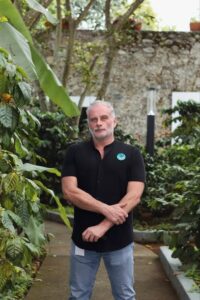
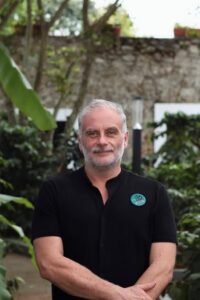
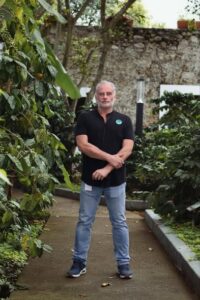
Manuel García Estrada (Córdoba, 1972).
A cultural manager since the age of 14 and an astronomy lecturer for the Autonomous University of the State of Mexico since age 19; a public speaking champion representing Tec de Monterrey and Toastmasters International. A graduate in Communication Sciences from ITESM, he holds specializations in corporate and political communication, the history of everyday life in Mexico, Viceroyalty-era art, art valuation, cultural management and promotion, educational consulting, and semiology. He has served as a university professor for 12 years. He is the editor of the arts and sciences magazine *El Águila*, a columnist for *Milenio EdoMex*, and a contributor to educational magazines. He is a specialist in broadcasting and high-persuasion marketing. He created the Córdoba and Orizaba jazz festivals as well as the current Coffee Jazz Fest. He is the driving force behind Barista Day—celebrated annually on April 1st in over 100 countries, with legislation regarding the observance enacted in various jurisdictions. He is the co-founder of Rococó Café Espresso and founder of the Academy of Coffee Arts and Sciences. He serves as the organizing director and producer of national gatherings for Mexicans and specialized coffee events, most notably the world’s largest coffee festival: Coffee Fest México, held in Mexico City’s Zócalo in 2019. He is known on social media as «El Hijo del Rayo» (Son of the Lightning Bolt). He is the co-founder of the Rococó Coffee Cultural Bank and creator of the national movement «Coffee Can Save Mexico» (*El café puede salvar a México*). He also created the «Posmópolis» international art exhibition in Córdoba. He fosters the development of the coffee market through promotional activations that build Mexico’s «Coffee Axis» (*Eje Cafetalero*), a region he oversees as Regent. He serves as president of the Association of Creators for Social Development, through which he has donated over 250,000 books across various states and established 57 community libraries. He is a writer of essays, novels, and poetry covering various subjects—with a specialty in coffee—and has published seven books since 1999.
Long live Rococó Café!